

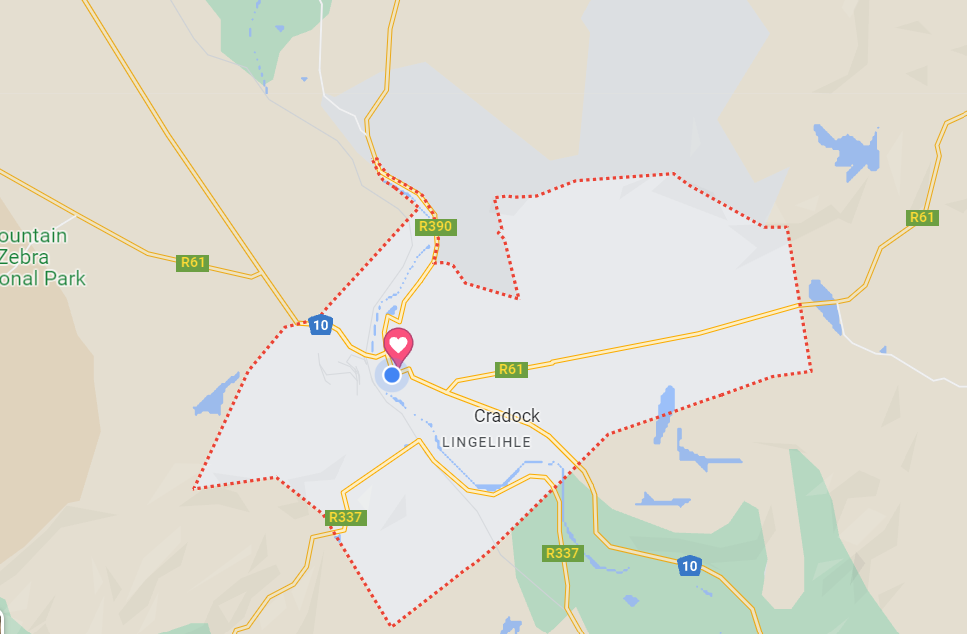
- Cradock
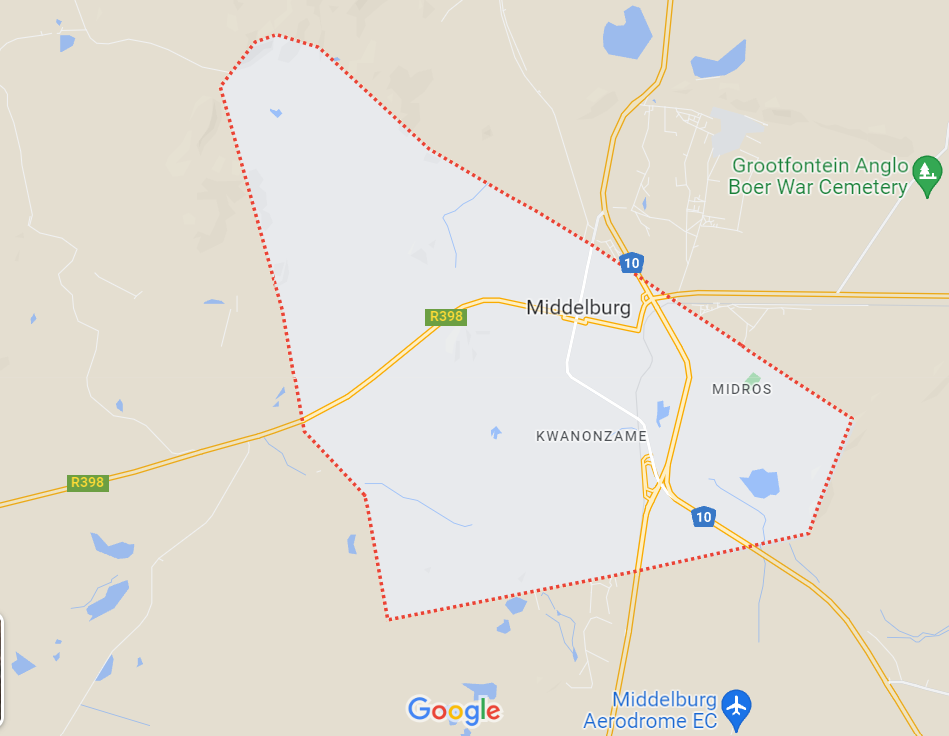
- Middelburg
The town of Cradock is situated in the Eastern Cape province of South Africa. Cradock was founded in 1813 on the banks of the Great Fish River to cater for the migratory farmers who settled in this ruggedly beautiful area with its excellent grazing, abundant water and healthy climate. Cradock is a thriving agricultural community which specialises in the production of wool, mohair and in cattle farming.
Cradock is the principle town of the Karoo Heartland Route and an important agricultural centre, Cradock boasts fine architecture and a number of important monuments and museums (including the Olive Schreiner House, home of the writer of the classic, ‘Story of an African Farm’). The area was considered strategically important by the early 19th century settlers, and this heritage is reflected in many of the well-preserved buildings – including the old parsonage (1849), which today houses the Great Fish River Museum, a fascinating showplace of settler culture. A more recent view is provided by the epitaphs on the tombs in the Lingelihle Graveyard, final resting place of a number of people who lost their lives in the struggle against apartheid. The wide, fertile plain and its surrounding mountains offer many attractions for nature lovers.
Activities Nearby Lake Arthur is a popular water sports venue.
The Great Fish River is home to the country’s biggest annual canoe marathon and provides exciting paddling and tubing during most of the year. The Mountain Zebra National Park is a favourite for game viewing, birding and scenic drives.
The sulphur hot springs of the Cradock Spa have been a popular draw card almost since the town was founded. The Spa draws people from all over the country to experience both its open-air and indoor heated pools.
The original part of town is graced with some of the finest buildings, like the Dutch Reformed Church which is a national monument and designed to look like London’s St Martin’s-in-the-field.
The Olive Shreiner House Museum is devoted to the author’s life and works. Olive was said to write the novel ‘The Story of an African Farm’ whilst working as a governess on farms in the district, and much of her early life was spent in the town.
Cradock’s streets are lined with Ilex Oak Trees, particularly on Dundas Street, where they have been declared a national monument.
The Old Water Mill, completely restored, is worth a visit and the Great Fish River Museum – housed in the converted second Dutch Reformed church – conveys what it was like to live as a settler after 1806, during the second British occupation of the Cape.
The unique town Cradock is a place of literary legends, Boer war heroes and anti-Apartheid struggle icons such as the Cradock Four. But it is always been best known for down to earth, day-to-day, warmth and kindness – so typical of much of the Eastern Cape and small towns in the Karoo.
Tourism prospers in Cradock because of its historical past and the geographical position makes this an ideal stop over for the traveller en-route to the major centres.
Middelburg, Karoo lies in the middle of its surrounding Towns, approximately 100 km from all. Surrounded by Graaff-Reinet, Cradock, Steynsburg, Colesberg, Richmond & Hanover,( it is no secret as to where the name “Middelburg” came from!) It falls under the Inxuba Yethemba Local Municipality, in the Chris Hani District Municipality. Grootfontein Cemetery, which is owned by the Municipality, is situated next to and is visible from the road which leads to the airport and military base. The graves are scattered in the old section. It dates back to the Anglo-Boer War. The town is steeped in Anglo Boer War history and in close proximity to Market Square stands the Dutch Reformed Church, the Methodist Church and the town hall. Lying in the middle of the Karoo, surrounded by mountains in an area recognised for its prolific and naturally occurring herbal plant life, San rock art and a scenic beauty beyond description, Middelburg is and isn’t like other Karoo towns. The skies are filled with stars at night, but, despite the fact that this is the middle of the Karoo, Middelburg differs from other towns because it has had so few water restrictions, due in large part to the surrounding waterfalls and streams that provide the town with its water. The town probably gets its name from its geography – it not only lies halfway between Port Elizabeth and Bloemfontein, but halfway between Johannesburg and Cape Town as well. As such it serves as a stopover for many a traveller en route to somewhere.